A1SI Lutron HomeWorks Controller application iconLutron Lighting Upgrade

Lutron Lighting Upgrade — modern control for legacy HomeWorks

Bring your Lutron HomeWorks Interactive system into the modern smart home.

A1SI's Lutron Lighting Upgrade is an ESP32-based replacement processor firmware for Lutron HomeWorks Interactive installations. The existing keypads, Vareo dimmers, and 4-wire bus stay exactly as they are — the ESP32 speaks both the StarBus RS-485 keypad protocol and the 15V Vareo dimmer protocol natively, and adds a local REST API plus in-development Matter support. Modern control without rip-and-replace.

Get a quote
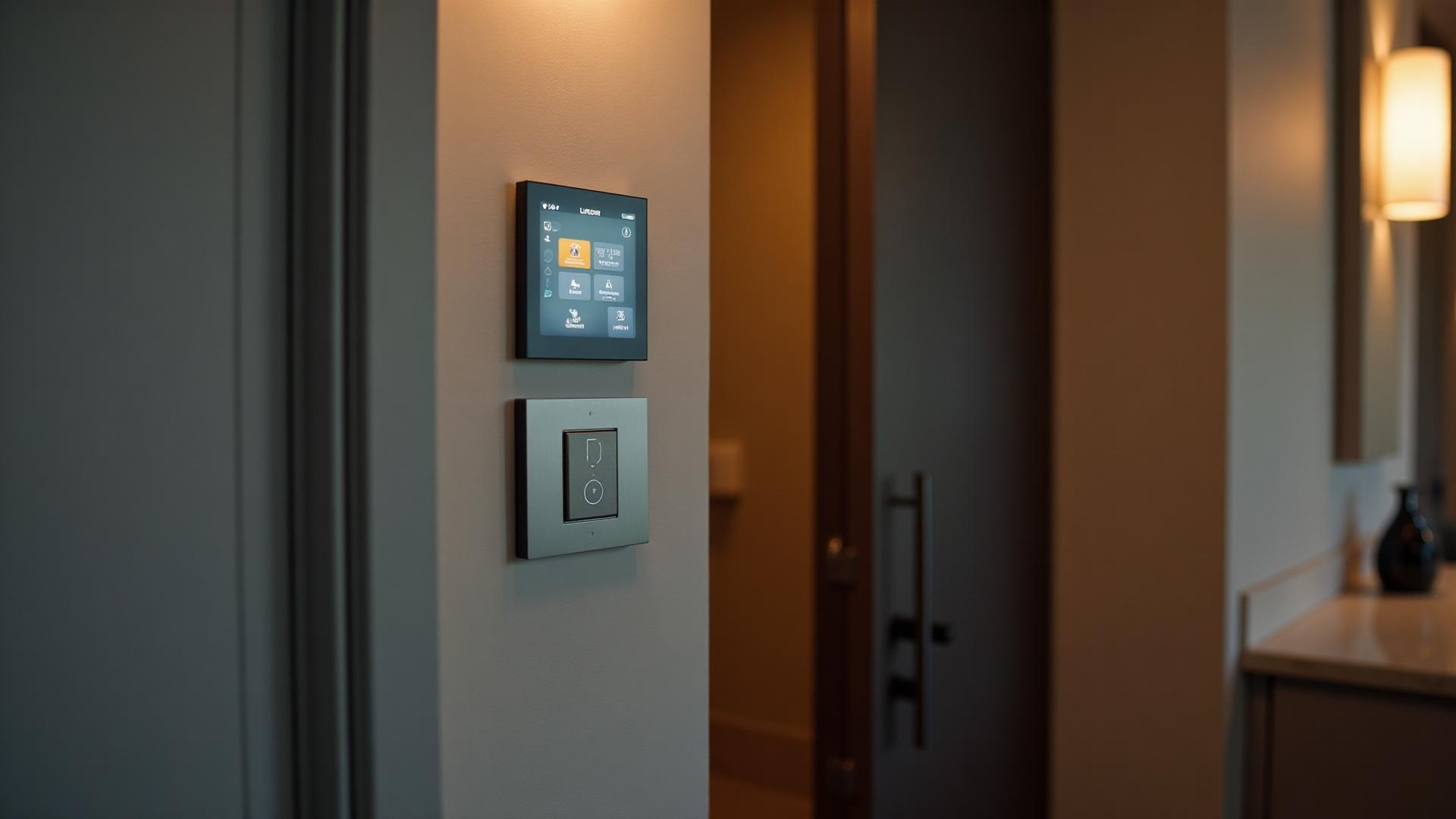
Lutron lighting control installation — the kind of legacy HomeWorks Interactive system A1SI's ESP32 replacement processor modernizes without disturbing the existing keypads and dimmers
192.168.0.225

ESP32-based replacement processor

A drop-in processor that speaks both Lutron bus protocols natively.

The Lutron Lighting Upgrade firmware runs on a single ESP32 and replaces the original HomeWorks Interactive processor at the heart of the installation. On the keypad bus it speaks StarBus over RS-485 — 9,600 baud, differential signaling, full bidirectional state broadcast so every keypad's LEDs reflect the current scene. On the dimmer bus it speaks the 15V Vareo protocol — 120 Hz line-synced clock, ten phase-angle brightness levels per zone. Above both buses sits a state manager, a scene engine, WiFi station mode, and a local REST API on port 80 — and the Matter-enabled build is in active development.

  • StarBus RS-485 keypad protocolNative RS-485 driver for the Lutron StarBus keypad bus — 9,600 baud, 8N1, differential A/B signaling on the 4-wire bus. Runs on its own dedicated processor core for predictable, real-time bus timing. PRESS commands from any keypad on the bus flow in; state-bit updates broadcast back so every keypad on the bus shows consistent scene state on its LEDs.
  • Vareo 15V dimmer-bus driverNative driver for the 15V Vareo phase-angle dimmer bus — 120 Hz clock synced to the AC line, 1,300 ms per command frame, ten brightness levels per zone (0 off through 9 full). Reverse-engineered from oscilloscope captures of the original Lutron processor's traffic and fully documented by A1SI engineering.
  • Local REST API on port 80A local-network HTTP API exposes the system to anything that speaks JSON. GET /api/status returns the full state. GET /api/zones returns brightness for every zone. PUT /api/zones/{id} sets a zone's brightness 0–9. POST /api/scenes/{id} activates or deactivates a scene. No cloud round-trip, no proprietary control protocol — just plain HTTP on the customer's LAN.
  • Scene system — button → scene → zonesA central scene engine maps each keypad button to a scene, and each scene to a set of (zone, on/off, brightness) actions. Press a button on a keypad or POST a scene activation over the REST API and the same engine drives the same dimmers — keypad state and API state stay coherent.
  • WiFi station modeThe ESP32 joins the customer's existing WiFi network in station mode. That's the network the REST API listens on, and the network any home-automation hub (Home Assistant, openHAB, Node-RED, custom HTTP client) reaches the system through. No separate hub, no dedicated wiring.
  • Matter protocol support (in development)A Matter-enabled build is in active development. When Matter ships, the same processor exposes the Lutron installation as a Matter device to Apple Home, Google Home, Samsung SmartThings, and Amazon Alexa over Thread or WiFi without changing any of the underlying bus drivers.

Across the system

A modernized processor that respects the installation it lives in.

Every choice in the firmware design favors the existing installation: the keypads stay, the dimmers stay, the wiring stays. The only thing that changes is the brain — and the brain learns to speak both Lutron bus protocols natively, exposes a clean local REST API, and lays the groundwork for Matter without ever talking to a cloud service.

Lutron HomeWorks Interactive compatible

Targets the analog-era HomeWorks family — the HomeWorks Interactive system with Vareo phase-angle dimmers on the 15V bus and StarBus keypads on the 4-wire RS-485 bus. The address range supports up to 17 keypad addresses on a single bus (0x91 through 0xA1).

Drop-in replacement, not a rip-and-replace

The existing keypads, Vareo dimmers, and 4-wire bus wiring all stay exactly as they are. Only the original Lutron processor is replaced with the ESP32 board. The result is a modernized system at a fraction of the cost and disruption of a full Lutron QS upgrade.

Local REST API — integrates with any HTTP client

The REST API on port 80 integrates cleanly with Home Assistant, openHAB, Node-RED, and any custom client that speaks HTTP and JSON. Voice control flows through the customer's home-automation hub of choice — the firmware does not lock the system to any one voice-assistant vendor.

Configurable zones, scenes, and button maps

Zones map to (bus, address) tuples; scenes map to sets of (zone, on/off, brightness) actions; keypad buttons map to scenes. The mapping is configured per installation by A1SI engineering, so the firmware arrives pre-configured for the keypads and zones in front of it.

Bidirectional keypad state

Every state change — whether it came from a keypad press, a REST API call, or a scene activation — is broadcast back across the StarBus to every keypad on the bus. Keypad LEDs always reflect the live scene state, no matter which interface drove the change.

Matter protocol — in development

A Matter-enabled firmware build is in active development. Once shipped, the same processor exposes the Lutron installation as a native Matter device to Apple Home, Google Home, Samsung SmartThings, and Amazon Alexa — no Lutron-side software changes required.

A modern processor for a legacy system

ESP32 inside. Lutron protocols spoken natively.

A single Espressif ESP32 microcontroller runs the entire system: the RS-485 StarBus driver on one core, the 15V Vareo dimmer driver, a central state manager, a scene engine, WiFi station mode, and a local REST API. Lutron's two bus protocols were reverse-engineered against the original processor's traffic and are documented end-to-end by A1SI engineering. Compatibility targets the HomeWorks Interactive family specifically — HomeWorks QS and RadioRA 2 use a different Lutron Integration Protocol stack and are not addressed by this firmware.

Platform
ESP32 single-chip controller
Buses
StarBus RS-485 9,600 8N1 · Vareo 15V 120 Hz
API
REST / JSON on port 80 (local network)
Compatibility
Lutron HomeWorks Interactive

Why Lutron Lighting Upgrade

Modernize the processor. Keep the installation.

Keep what works, replace what doesn't

The Lutron HomeWorks Interactive installation behind the wall — the keypads, the Vareo dimmers, the 14V power and data pair, the 15V dimmer bus — is engineering that's still serving the building every day. The only thing that has aged out is the central processor. A1SI's ESP32-based firmware drops in to fill that one slot. No tearing out keypads, no rewiring zones, no replacing every dimmer in the closet — just a modern brain at the head of an installation that the customer has already paid for once.

Native bus protocols, no cloud lock-in

The ESP32 talks directly to the StarBus RS-485 keypad bus and the 15V Vareo dimmer bus in their native protocols. No gateway, no protocol translator, no proxy. The REST API lives on the customer's own LAN; the home-automation hub stays in the customer's control. There is no required cloud account, no required vendor app, no SaaS billing layer between a keypad press and a dimmer change.

Lutron's protocols, A1SI's engineering

The Vareo and StarBus protocols were reverse-engineered by A1SI from oscilloscope captures of an original Lutron processor's bus traffic — the byte structure of each command frame, the precise 60 µs gap after a broadcast, the 9,600-baud byte timing on the RS-485 bus, the 120 Hz line-synced clock on the Vareo bus. The firmware that drives those protocols is A1SI's own work, with Matter on the roadmap. A modern processor for a Lutron family that Lutron has not meaningfully updated in decades.

Give your HomeWorks installation a modern brain.

If you own — or maintain on a customer's behalf — a Lutron HomeWorks Interactive installation with Vareo dimmers and StarBus keypads, start a conversation. A typical engagement covers an on-site protocol verification against the specific HomeWorks revision and keypad addressing in place, a build of the firmware with the installation's zones and scenes mapped in, and the install of the ESP32 board in place of the original Lutron processor.

"Lutron", "HomeWorks", "Vareo", and "StarBus" are trademarks of Lutron Electronics Co., Inc. The A1SI Lutron Lighting Upgrade is an independent, third-party replacement processor product compatible with the named systems; A1SI is not affiliated with or endorsed by Lutron Electronics Co., Inc. The product targets Lutron HomeWorks Interactive systems with Vareo dimmers and StarBus keypads; compatibility with specific firmware revisions, panel models, and installation configurations is confirmed during the engineering engagement, not assumed from this page. Matter protocol support is in active development — engineering engagements today ship the current REST API surface, and Matter features will land in subsequent firmware revisions.