From BLE GATT to LTE-M to LoRaWAN — wireless that ships.
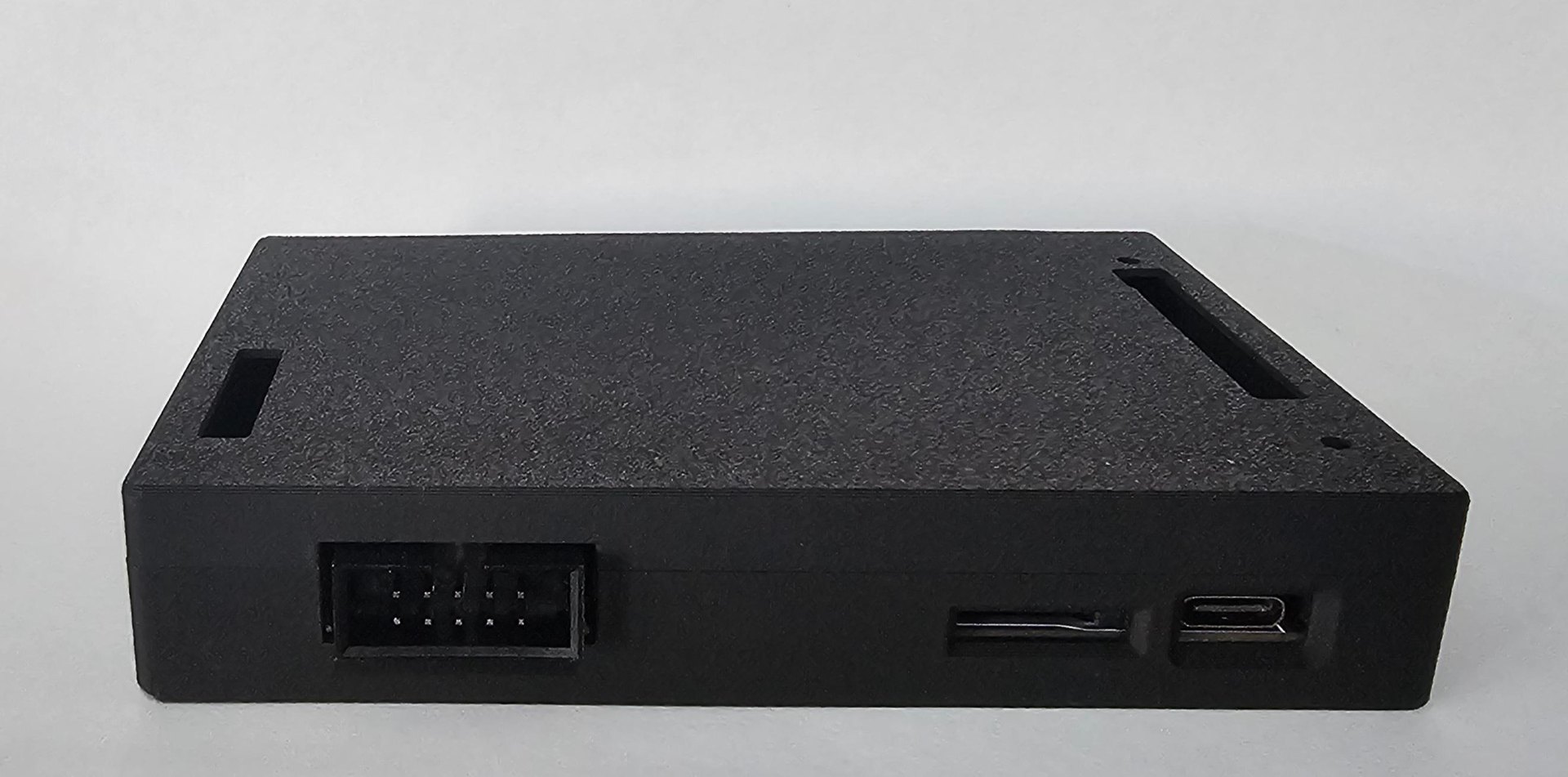
A1SI integrates wireless connectivity into hardware and embedded-software programs at every range: Bluetooth Low Energy and Classic for short-range device-to-host links, Wi-Fi for high-bandwidth local networks, cellular (LTE-M / NB-IoT / 5G) for fielded devices that need to phone home, LoRaWAN for long-range low-power sensor networks, and mesh radios (Zigbee / Thread / Matter) for whole-home and whole-building deployments. Most recently: the ESP32 BLE Modbus Bridge — a BLE-to-industrial-Modbus-RTU gateway built on Espressif's ESP32 platform that exposes the Nordic UART Service over BLE and lets a Chromium browser drive a factory-floor Modbus device through the Web Bluetooth API, no native driver, no app install.
Wireless decisions are rarely about "which radio is best" in the abstract — they're about which radio fits the spectrum budget, the power envelope, the regulatory regime, and the bill-of-materials cost target. A1SI runs every common radio family in-house so the recommendation comes out of measured trade-offs, not vendor allegiance.
Bluetooth Low Energy (BLE 5.x)
GATT services and custom characteristics, peripheral and central roles, mesh networking under the Bluetooth 5.3 Core spec, LE Audio with LC3 codec, LE Coded PHY for long-range, and Web Bluetooth API integration for browser-driven control surfaces. Recent A1SI work spans Nordic nRF52840, Espressif ESP32-S3 / C3, and TI CC26x2 silicon.
Bluetooth Classic
SPP (Serial Port Profile) for industrial / medical / embedded equipment that ships RS232 forever, A2DP for streaming audio, AVRCP for media control, and HID for keyboard / mouse / game-controller bridges to vintage and legacy host systems. ESP32 dual-mode silicon as the workhorse platform.
Wi-Fi (2.4 / 5 / 6 GHz)
Dual-band and tri-band integration on ESP32-S3 / S2, Nordic nRF7002, Realtek, and Espressif ESP32-C6 (Wi-Fi 6) silicon. WPA3-Personal and WPA3-Enterprise authentication, captive-portal provisioning, mesh networking under IEEE 802.11s, and Matter-over-Wi-Fi for whole-home commissioning.
Cellular (LTE Cat-M1, NB-IoT, 5G)
3GPP Release 13 LTE-M for mid-rate IoT, Release 13 NB-IoT for low-rate sensors, 3GPP Release 16 5G NR for high-bandwidth fielded applications. Quectel, Telit, Sierra Wireless, and u-blox modems; SIM-card and eSIM provisioning; AT-command driver integration; carrier certification on AT&T, Verizon, T-Mobile, and the UK / EU MNO list.
LPWAN (LoRaWAN, Sigfox)
LoRaWAN Class A / B / C end-devices under the LoRa Alliance RP002-1.0.4 regional parameters, public LoRaWAN gateway deployment (The Things Network, Helium, Senet), and private network builds for industrial and agricultural sensor fleets. Sigfox where the operator footprint covers the deployment region.
Mesh & IEEE 802.15.4
Zigbee 3.0 application layer, Thread 1.3 (the OpenThread stack on Nordic nRF52840 / nRF54L), Matter 1.3 fabric integration for whole-home commissioning, and raw IEEE 802.15.4 PHY / MAC for custom mesh protocols. 6LoWPAN adaptation layer for IPv6-native sensor networks.
How we engage
Five steps from spectrum plan to regulatory hand-off.
We organize every wireless program around the same five-step flow — the regulatory and RF realities make late-stage radio changes very expensive, so the planning gate at step 1 is the most important one.
1
Spectrum + power + range plan
Use-case range, payload size, duty cycle, battery / power budget, regulatory region. The artifact: a written radio-selection rationale documenting why this radio over the alternatives, with reference designs cited.
2
Reference design + prototype
Module vs. discrete-radio decision, evaluation-board bring-up, GATT / network-stack scaffolding, end-to-end link verification. The artifact: a prototype that lights up the link and exchanges real payload over the chosen radio.
3
RF integration + antenna
PCB antenna placement (chip / PIFA / trace), keep-out zones, matching network tuning, VNA-measured return loss, range and link-budget sweeps. Co-located antenna isolation when the device runs multiple radios. The artifact: a tuned RF front-end measured against the link budget.
4
Pre-compliance scan
Conducted and radiated emissions against FCC Part 15 B/C, CE EN 300 328 / EN 301 893 / EN 300 220 (per radio band), Industry Canada RSS-247. SAR pre-compliance where the device touches a human body. The artifact: a pre-compliance report with margin numbers against every applicable limit.
5
Regulatory + production
Test-lab booking, regulatory submission package, carrier certification (PTCRB / GCF for cellular), Bluetooth SIG QDID listing, FCC ID assignment. DFM-clean production hand-off and ongoing post-market RF support. The artifact: the FCC ID / CE marking / Bluetooth QDID listing that lets you ship.
The bench
Wireless tooling and regulatory instrumentation.
Wireless work requires both the design-side toolchain (SDKs, sniffers, link-budget calculators) and the regulatory-side bench (spectrum analyzer, EMC chamber, conducted-emissions receiver). A1SI runs both in-house so the design choices made at the schematic stage are validated against the same instruments the certification lab will use.
Nordic Connect SDK + nRF ConnectZephyr-based Nordic Connect SDK for nRF52 / nRF53 / nRF54 / nRF91 silicon, nRF Connect for Desktop and Mobile for GATT inspection, packet capture, and provisioning. Bluetooth SIG QDID-compatible stack.
Espressif ESP-IDF + ArduinoESP-IDF v5.x for ESP32 / S2 / S3 / C3 / C6 silicon. Dual-mode Bluetooth Classic + BLE stack, Wi-Fi 4 / 6, Thread, Matter. The platform our recent BLE Modbus Bridge ships on.
Web Bluetooth APIChromium-based browser BLE GATT client (Chrome / Edge / Brave / Opera) for browser-driven control surfaces. No native driver, no app install — a single-page web app talks GATT directly. The killer-feature framing on our BLE Modbus Bridge.
Wireshark · Ubertooth · SniffleBLE advertising-channel sniffing with the Adafruit Bluefruit sniffer, Nordic nRF Sniffer (Wireshark), Sniffle on Sonoff dongles for BLE 5 PHY. Wi-Fi capture with airmon-ng / Kismet, 802.15.4 captures with the Zigbee2MQTT or Texas Instruments sniffer.
Spectrum analyzer + VNAKeysight / Rigol DSA-815 spectrum analyzer for 9 kHz – 7.5 GHz coverage, VNA for return-loss measurement on tuned antennas, conducted-emissions LISN + receiver for FCC Part 15 / CE EN 55032 pre-compliance scans before the certification booking.
Regulatory pre-compliancePre-compliance scans against the radio band the design ships in (Part 15 B/C, EN 300 328 / EN 301 893 / EN 300 220, RSS-247, RSS-Gen). We do not book the certification lab until the in-house pre-compliance shows margin against every limit.
Recent BLE work
The ESP32 BLE Modbus Bridge — browser-controlled industrial Modbus.
ESP32 BLE Modbus Bridge
Espressif ESP32 · Nordic UART Service · Web Bluetooth API
A Bluetooth Low Energy gateway that bridges the legacy industrial Modbus RTU protocol into the modern browser. Built on Espressif's ESP32 platform with ESP-IDF v4.4+, the bridge exposes the industry-standard Nordic UART Service (Service UUID 6e400001-b5a3-f393-e0a9-e50e24dcca9e; Write characteristic 6e400002-…; Notify characteristic 6e400003-…) at the BLE name "ESP32-Modbus-BLE", with MTU 20 B default plus configurable chunking. Two operating modes: a Mock mode that responds to Modbus function codes 0x03 / 0x04 / 0x06 with canned register values for end-to-end BLE testing without hardware, and a UART Bridge mode that forwards transparently between BLE and a real Modbus RTU device on UART1 (TX GPIO 17, RX GPIO 16, 9600 8N1, 1024-byte buffers). The killer feature: a Chromium-based browser (Chrome / Edge / Brave / Opera) talks directly to the bridge through the Web Bluetooth API — no native driver, no app install — turning a factory-floor Modbus control surface into a single-page web app. ~50–100 ms round-trip latency, comfortably inside typical 1–10 Hz Modbus polling cadence.
A certifiable design with the regulatory artifacts already in hand.
Every wireless program closes with the regulatory and integration artifacts the contract manufacturer + the certification lab + the carrier will all ask for. We hand off the design and the certificate, not just the schematic.
Built on the same engineering posture as the production-floor controllers we ship.
Open standards, open hand-off
Every wireless integration A1SI ships is built on a published, royalty-free protocol stack: Bluetooth Core, IEEE 802.11, IEEE 802.15.4, 3GPP, LoRaWAN. No proprietary radio black boxes, no NDA-only protocol stacks. Our recent BLE Modbus Bridge work uses the industry-standard Nordic UART Service so the bridge talks to any GATT client — Web Bluetooth, native iOS / Android, or a custom embedded GATT central — without a vendor SDK lock-in.
Production-floor pedigree
A1SI has been bridging modern wireless to legacy industrial protocols since the ESP32 platform shipped: Bluetooth Classic to RS232 for medical and industrial equipment that's stuck on serial forever, BLE to Modbus RTU for factory-floor PLCs that browsers couldn't reach, BT HID to PS/2 + Microsoft Serial Mouse for vintage and retro computer systems. Every product in the line is built around the same engineering posture: stable wireless link, transparent protocol forwarding, openly documented interface.
Regulatory rigor, not regulatory surprise
In-house pre-compliance scans against the exact limits the certification lab will measure (FCC Part 15 B/C, CE EN 300 328 / EN 301 893 / EN 300 220, IC RSS-247, RSS-Gen). We do not book the test lab until the in-house scan shows positive margin on every limit. Bluetooth SIG QDID listings, FCC ID assignments, and carrier certifications (PTCRB / GCF) handled as production deliverables, not afterthoughts.
A1SI picks up wireless programs at every stage: spectrum and radio selection, GATT / mesh / network-stack design, RF integration and antenna tuning, pre-compliance scans, regulatory certification, production hand-off, and ongoing post-market RF support. Send the use-case, the regulatory target, or the range / battery problem you're stuck on — we'll come back with what we'd do next and what the engagement would look like.