Case study · 2006–2007 · Allison Transmission · GM
Built for General Motors
Production-floor EPROM programming that shipped every Allison transmission controller.
Technical Products Group built the ATEC EPROM Programmer for Allison Transmission — first as a DOS system in 2006, then re-written as ATEC '07 in C# on Windows XP / Vista with the exact same operator menu so production-floor staff didn't have to retrain. The application drove two DataIO 3980 EPROM programmers and two Intermec PF2i thermal label printers in parallel over RS-232, burning firmware and printing barcoded serial-number labels for the controller assembly line.
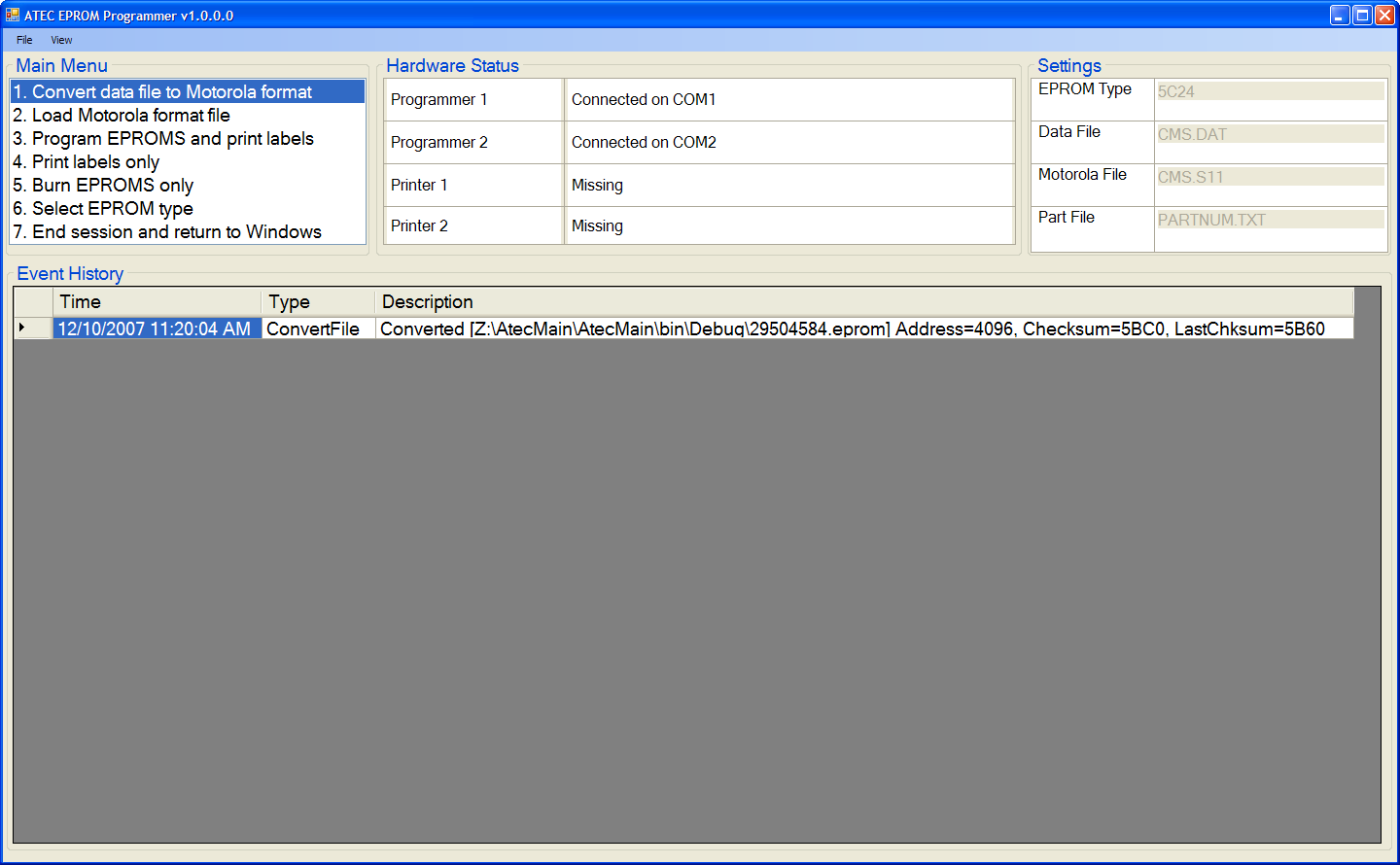
Production-floor operators wanted the same five keystrokes they'd used on the DOS-based ATEC for over a decade. ATEC '07 preserved that exact menu structure — Convert / Load / Program / Print / Burn / Select / End — and added a Windows menu bar for IT staff and diagnostic workflows. Hardware status, current settings, and a session-long Event History sat on one screen so a line lead could see at a glance whether both programmers and both printers were online before the next part arrived.
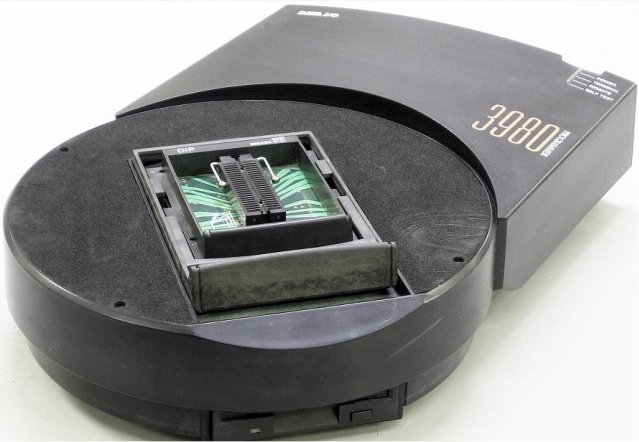
Two DataIO 3980 EPROM programmers, in parallelDual-station EPROM burning over RS-232 with checksum-packet validation against the DataIO Remote Control protocol. Operators dropped a fresh module in each socket, ATEC '07 burned both simultaneously, and the line moved twice as fast as a single-station rig.
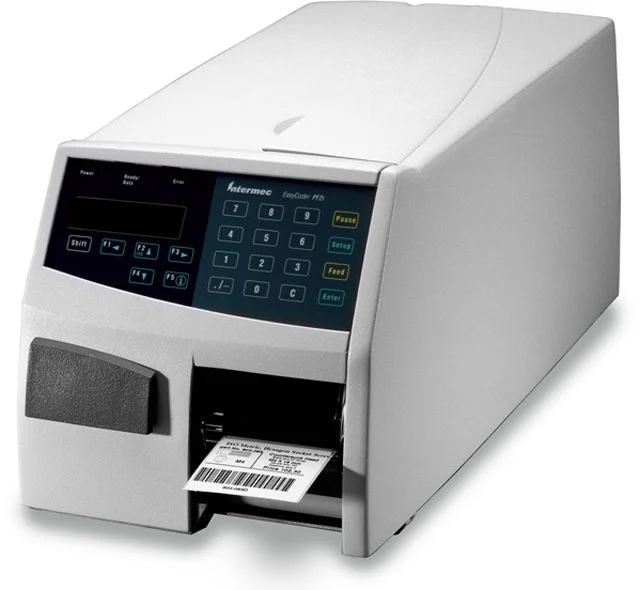
Two Intermec PF2i thermal label printers, in parallelBarcoded serial-number labels printed on both Intermec PF2i printers over RS-232 in lock-step with the burn cycle. Each label carried the programmed part number, checksum, and serialized identifier so QA could trace every controller back to the exact firmware revision and burn timestamp.
Intel ↔ Motorola firmware format conversionThe data the engineering team produced came in Intel HEX; the DataIO 3980 wanted Motorola S-Record (S11 / S19) format. ATEC '07 included a conversion routine that ran on every data-file load — address-translated, checksum-validated, audit-logged in the Event History — so the operator never had to think about the format gap.
Comprehensive event history + diagnosticsEvery action the operator took — file conversion, file load, EPROM burn, label print — landed in a timestamped Event History on the main screen and a persistent log file on disk. Separate Programmer 1 / Programmer 2 / Printer 1 / Printer 2 diagnostic views let an IT troubleshooter resolve a stuck RS-232 session without leaving the application.
Mouse-optional, keyboard-firstThe Main Menu used numeric shortcuts (press 1 to Convert, 2 to Load, 3 to Program-and-Print, etc.) so the line operator could run the application one-handed while loading the next EPROM. Windows menu bar (File / View) added for IT staff and corner-case workflows; operators never needed it.
Hardware status, at a glanceBoth programmers and both printers reported their connection state on the main screen — Connected on COM1, Connected on COM2, Missing — so the line lead saw the rig's state without launching a separate diagnostic tool. RS-232 link health was polled continuously while the application ran.
Eight devices, one operator. One keystroke per burn.
ATEC '07 didn't try to look modern; it tried to be invisible. The DOS predecessor had been running the same menu for a decade by the time the C# re-write landed, and the operators owned that muscle memory. The application kept the muscle memory, modernized everything underneath, and added the diagnostic surface IT had been asking for the whole time.
DataIO 3980 EPROM programmers
Industry-standard production EPROM programmer from Data I/O Corporation. Two units, RS-232 control, dual-socket simultaneous burn. ATEC drove them via the documented DataIO Remote Control protocol with packet-checksum validation on every command.
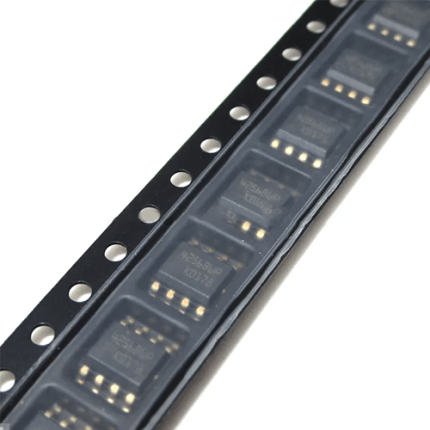
EPROM modules — Allison controller firmware
The application burned the actual EPROM modules that became transmission-controller firmware on the Allison line. Each socketed device received an address-translated Motorola S-Record image, the burn was checksum-verified end-to-end, and a barcoded serial-number label tied the chip to its source firmware in the Event History.
Intermec PF2i thermal label printers
EasyCoder PF2i (Intermec, now Honeywell) thermal label printers, RS-232 controlled. Two units running in parallel, printing barcoded serial-number + part-number labels for the Allison transmission-controller assembly line.
Intel ↔ Motorola conversion
Engineering produced firmware in Intel HEX format; the DataIO 3980 wanted Motorola S-Record (S11 / S19). ATEC ran the format conversion on every file load, address-translated and checksum-validated, with the result captured in the Event History.
C# WinForms on Windows XP / Vista
Microsoft Visual Studio, native .NET WinForms, no third-party UI toolkit. Designed to operate full-screen at 1440×900 on the production-floor flat panels. Settings persisted to an XML configuration file alongside the executable.
Event History + persistent log
Every operator action, every hardware event, every checksum-mismatch landed in a session-long Event History on the main screen and a rolling text log on disk. Production QA could reconstruct any controller's firmware lineage from the log if a unit came back from the field.
A production case study
A decade on the line, two hardware rigs in lockstep.
From the DOS-based ATEC system in 2006 through the ATEC '07 C# re-write that shipped under Windows XP and Vista, the same application architecture moved EPROMs through Allison Transmission's production line — two DataIO 3980 programmers, two Intermec PF2i printers, full RS-232 plumbing, and a keyboard-first operator UI that the line never had to retrain on.
Era
2006–2007
Customer
Allison Transmission (GM)
Stack
C# · .NET WinForms · Visual Studio
Hardware
2× DataIO 3980 · 2× Intermec PF2i · RS-232
Why this case study matters
Manufacturing-systems engineering, decades before "IoT" was a word.
Engineered for the production floor, not the desk
ATEC '07 was designed for a line worker with greasy gloves and the next part already in their hand. The Main Menu accepted single-digit keyboard shortcuts; the Hardware Status panel told the operator at a glance whether the rig was ready; the Event History caught every action so QA could trace any controller back to its burn. The Windows menu bar existed for IT, not for the line — the line never needed it.
Backward-compatible UX, modern underneath
The DOS-based ATEC had been running the same operator menu for a decade by the time the C# re-write landed. The new ATEC '07 preserved the exact menu — same numbering, same wording, same flow — so the operators didn't lose a single day of throughput to retraining. Underneath, the WinForms re-write modernized the hardware drivers, the diagnostic surface, and the logging in ways the DOS app never could.
Traceable from controller to log line
Every EPROM the line shipped carried a barcoded serial number printed on a thermal label, tied through the Event History to the source firmware file, the checksum, and the burn timestamp. When a controller came back from the field, QA could rebuild the lineage from the log on disk. That same discipline carries forward in A1SI's current 21 CFR Part 11 audit-trail work on CVWS, EMDT, and TERM.
If your line needs an operator UI that engineers won't have to apologize for — keyboard-first, hardware-aware, diagnostic-friendly — A1SI's been doing this since 1997. Modern stacks now (C# / .NET, Python, React Native), same engineering discipline. Tell us about your line.
"Allison Transmission" is a trademark of Allison Transmission, Inc. "General Motors" and "GM" are trademarks of General Motors LLC. "DataIO" and "PS3980" / "3980" are trademarks of Data I/O Corporation. "Intermec" and "EasyCoder" are trademarks of Honeywell International Inc. (formerly Intermec Technologies). "Microsoft", "Windows", "Visual Studio", "Visual Basic", and ".NET" are trademarks of Microsoft Corporation. The case study above describes engineering work performed under contract by Technical Products Group (TPG, the predecessor company to A1 Systems Integrators) for Allison Transmission during 2006–2007, and is preserved on this page as historical portfolio and pedigree — not as a currently shipping product offering. A1SI is not affiliated with or endorsed by Allison Transmission, General Motors, Data I/O Corporation, or Honeywell / Intermec today, and IP ownership of the deployed application belongs to the program owners. Allison Transmission, Inc. became an independent company in 2007.