Case study — 2008–2012 BMW X5 platform · Visteon partnership
Built for BMW
In-car multi-touch, gesture, and haptics — built years before the rest of the industry shipped them.
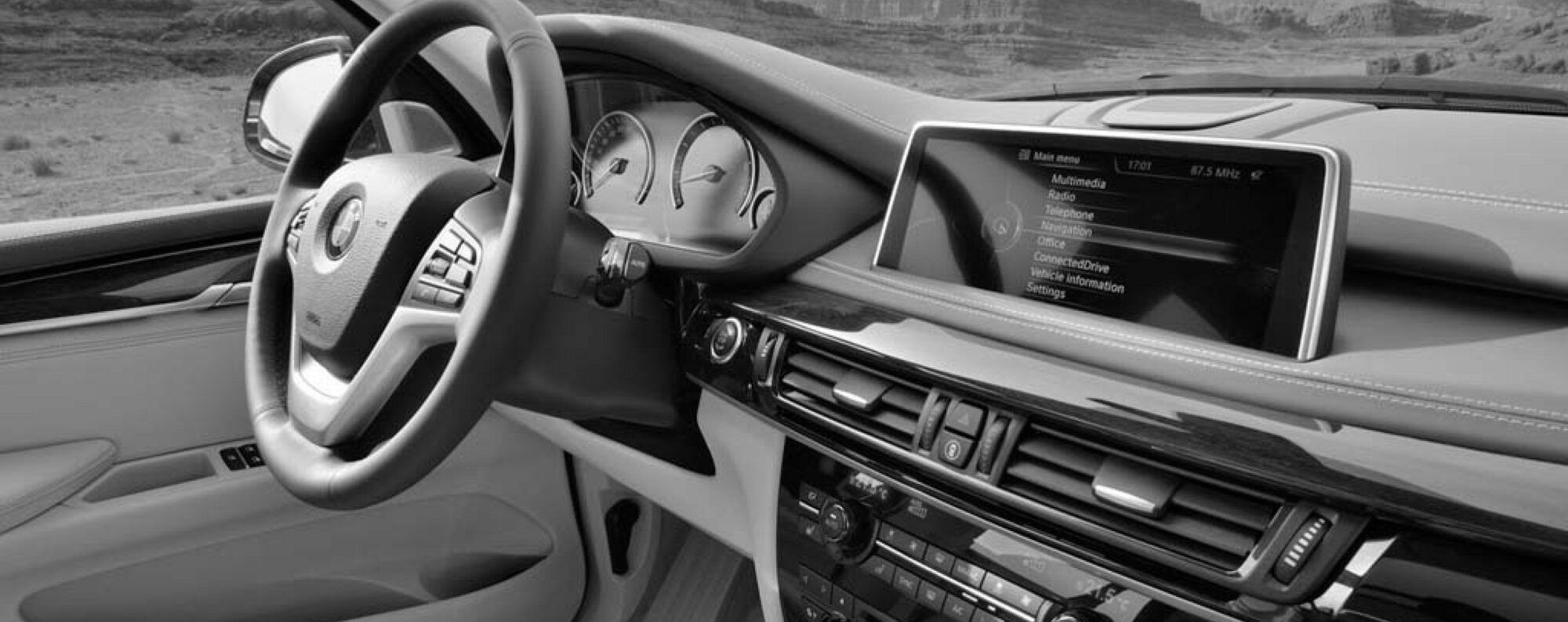
Between 2008 and 2012, A1SI (formerly Technical Products Group) partnered with Visteon Corporation to build a next-generation console and instrument-cluster prototype on the BMW X5 platform. iPhone-4-era capacitive multi-touch, non-touch hand gestures for media, Immersion® haptic feedback on a flat touchscreen, NVIDIA-powered 3D navigation, and deep CAN-bus integration into the vehicle's engine, seat, transmission, suspension, and climate subsystems — featured on CNET at CES Las Vegas in 2009 and 2010.
A1SI, formerly Technical Products Group, provided comprehensive automotive solutions for more than ten years to clients including BMW, General Motors, Ford Motor Company, Visteon Corporation, Siemens, Bosch, Hitachi, TRW, and many tier-2 suppliers. Between 2008 and 2012 we partnered with Visteon to create a new generation of automotive console and instrument-panel electronics for the BMW X5 vehicle platform, featuring technologies that were just emerging in consumer products and were years away from production automotive head units. The prototype was a working system — real hardware, real touchscreen, real haptic actuators, real CAN traffic to the vehicle's subsystems, on a real X5.
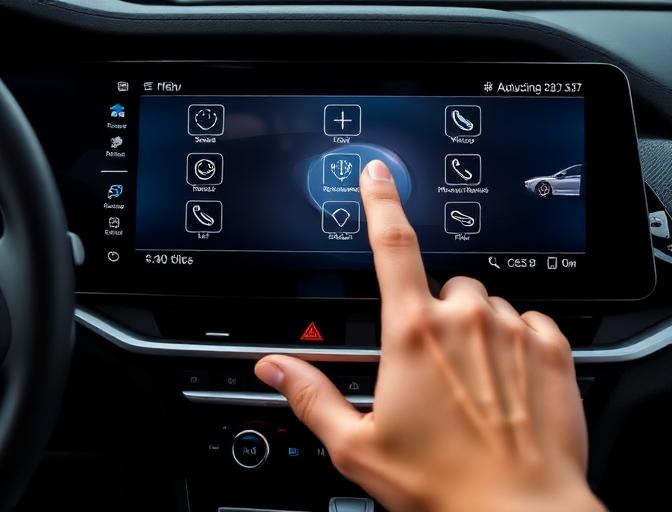
Capacitive multi-touch with gesture recognitionThe center stack ran the same ATMEL maXTouch EVK-mXT224A capacitive touch controller silicon that shipped in the iPhone 4 — pinch, zoom, swipe, and multi-finger gestures, in an automotive cabin, in 2009. Most production automotive head units of the era were single-point resistive screens; capacitive multi-touch in a car was years ahead of the broader market.
Non-touch hand-gesture media controlWave a hand near the head unit to skip a track or adjust volume — no touch, no glance away from the road. The gesture sensing predated the Microsoft Kinect (late 2010) and predated BMW's own production gesture control on iDrive 7.0 by five-plus years.
Immersion® haptic feedback on a flat touchscreenImmersion® Haptics Tactile Modules pulsed the touchscreen surface under the driver's finger to simulate a physical button press — soft tap for a menu selection, firm click for a binary toggle, longer pulse for a rejected input. Eyes-off-road tactile feedback on a sheet of glass.
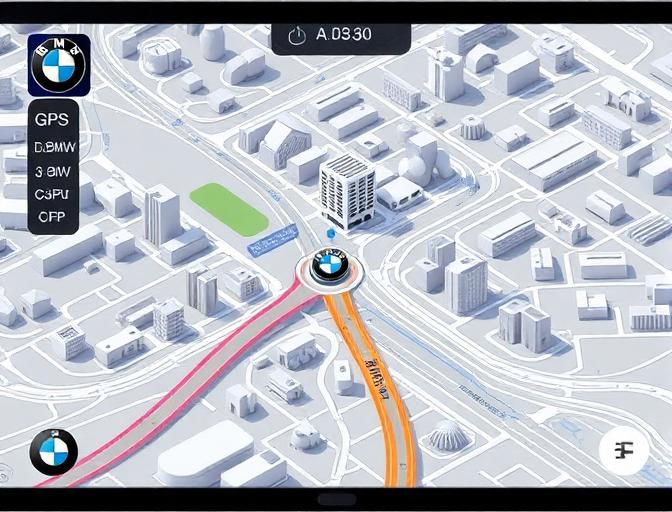
NVIDIA UiComposer 3D navigationThe map view rendered in 3D perspective on the head unit, authored with NVIDIA UiComposer running against the GeForce GPU — desktop-class GPU tooling pulled into automotive HMI years before automotive head units commonly had dedicated GPUs at all.
CAN-bus vehicle subsystem integrationThe head unit was a node on the vehicle's Controller Area Network, reading and writing to the Engine Control Unit, Seat Control Units, Transmission Control, Active Suspension, and Climate Control. Intrepid Vehicle Networks CAN USB interface modules drove development and bus-level diagnostics.
Apple iPod, iTunes, and Bluetooth mediaYears before CarPlay commoditized the work, A1SI integrated Apple iPod / iTunes media control over USB and the iPod Accessory Protocol (USB, iPod, CD, AUX — song selection by Artist, Album, Genre) alongside Bluetooth phone synchronization over HFP, PBAP, and A2DP for pairing, contact sync, and hands-free calling.
Each technology, engineered for the cabin — not lifted from a consumer phone.
Automotive HMI is not consumer UI in a dashboard frame. Drivers need eyes-off-road feedback. Capacitive touch has to survive glove use, ambient temperature swings, and cabin EMI. CAN-bus integration has to negotiate timing windows against the rest of the vehicle electronics. Every technology in the X5 prototype was tuned for that engineering reality — and shipped years before the broader automotive industry caught up.
ATMEL maXTouch capacitive multi-touch
ATMEL maXTouch EVK-mXT224A — the same touch controller silicon the iPhone 4 shipped with — driving a capacitive multi-touch panel in the X5's center stack. Pinch, zoom, swipe, and multi-finger gestures, in 2009, when most production automotive head units were still single-point resistive screens. Capacitive touch in an automotive cabin had to handle glove use, ambient temperature swings, and EMI from the rest of the vehicle electronics — significantly harder than a consumer phone in a pocket.
Non-touch hand-gesture recognition
Hand-gesture sensing for media volume and track selection — wave a hand near the head unit to skip a track or adjust volume without ever touching the screen. Combined infrared sensors with motion-detection algorithms running on the head-unit processor. Predates the Microsoft Kinect (late 2010) and predates BMW's own production gesture control on iDrive 7.0 (2015–2017) by more than five years.
Immersion® Haptic tactile feedback
Immersion® Haptics Tactile Modules made the flat capacitive touchscreen physically pulse under the driver's finger to simulate the feel of a physical button press. The haptic actuators were tuned for different sensations — a soft tap for a menu selection, a firmer click for a binary toggle, a longer pulse for a rejected input. The point isn't theatre; in a vehicle the driver can't safely look at a sheet of glass to confirm a button press, so the haptic pulse delivers the same eyes-off-road feedback a physical button used to.
NVIDIA UiComposer 3D navigation
The X5 prototype's 3D map ran on the head unit's GPU, authored with NVIDIA UiComposer running against the GeForce GPU pipeline — desktop-class GPU tooling pulled into automotive HMI years before automotive head units commonly had dedicated GPUs at all. Most 2009–2012 automotive maps were 2D top-down; 3D perspective views were premium features on flagship navigation systems.
CAN-bus vehicle subsystem control
Beyond media playback, the head unit was a node on the vehicle's Controller Area Network — reading and writing to the Engine Control Unit, Seat Control Units, Transmission Control, Active Suspension, and Climate Control. The 'infotainment' label undersells what a modern head unit actually does; the prototype's CAN integration reflected the engineering reality of a head unit as a first-class participant in the vehicle's control network. Intrepid Vehicle Networks CAN USB interface modules drove development and bus-level diagnostics.
Apple iPod / iTunes + Bluetooth media
Apple iPod and iTunes media integration over USB and the iPod Accessory Protocol — USB, iPod (the device), CD, and AUX sources, with song selection by Artist, Album, and Genre. Bluetooth phone synchronization over the Hands-Free Profile (HFP), Phone Book Access Profile (PBAP), and Advanced Audio Distribution Profile (A2DP) for pairing, contact sync, and hands-free calling. Years before Apple announced CarPlay (2014), A1SI was doing the same integration work that Apple later commoditized.
Program credibility
Real platform. Real partner. Real showcase.
The X5 prototype wasn't a concept render or a trade-show mock-up. The prototype was a working system on a real BMW X5, built with Visteon Corporation under contract, and shown to the press at the Consumer Electronics Show in Las Vegas in 2009 and 2010 — covered by CNET, the Discovery Channel, and G4. A1SI's automotive engineering practice ran for more than a decade alongside BMW, General Motors, Ford Motor Company, Visteon, Siemens, Bosch, Hitachi, TRW, and many tier-2 suppliers.
Era
2008 – 2012
Partner
Visteon Corporation
Platform
BMW X5 console + instrument cluster
Showcased
CES Las Vegas 2009 + 2010 (CNET · Discovery · G4)
Featured on CNET
Consumer Electronics Show — Las Vegas, 2009
The CNET BMW reel from the CES floor
A1SI technology was spotlighted during the Consumer Electronics Show in Las Vegas in both 2009 and 2010, and highlighted on CNET, the Discovery Channel, and G4 new-technology segments. The reel below is the 2009 CNET feature.
Why this case study matters
Automotive engineering, since long before "smart car" was a phrase.
Pioneer-class automotive HMI
A1SI built multi-touch, hand-gesture, and haptic-feedback automotive HMI years before consumer-class equivalents existed in the automotive market. The X5 prototype's capacitive touchscreen used the same touch controller silicon the iPhone 4 shipped with. The hand-gesture media controls predated the Microsoft Kinect by eighteen months and predated BMW's own production gesture control by more than five years. The NVIDIA UiComposer 3D map pulled desktop-class GPU tooling into a head unit at a time when automotive head units rarely had a dedicated GPU at all.
Engineered for the cabin, not the desk
Automotive HMI is not consumer UI in a dashboard frame. The driver can't safely look at a piece of glass to confirm a button press — so the haptic actuators were tuned for eyes-off-road feedback, with distinct sensations for a menu selection, a binary toggle, and a rejected input. The capacitive touch panel was hardened for glove use, cabin EMI, and ambient temperature swings. The CAN-bus integration into the vehicle's engine, seat, transmission, suspension, and climate subsystems was negotiated against the rest of the vehicle electronics' bus timing. Every choice in the prototype reflected the engineering reality of an in-vehicle head unit, not a consumer device airdropped into a dashboard.
A1SI's automotive pedigree, since the Technical Products Group days
Ten-plus years of automotive engineering — prototype electronics, software packages, production parts testing, complete quality-assurance systems — alongside BMW, General Motors, Ford Motor Company, Visteon Corporation, Siemens, Bosch, Hitachi, TRW, and many tier-2 suppliers. The X5 program is one chapter in a longer story. That automotive pedigree carries forward into today's A1SI work: the CVWS commercial-vehicle weighing system, the IoT WiFi device provisioning stack, and the Wireless Bridges family of Bluetooth-to-serial / Modbus / HID adapters all draw from the same engineering practice that built the X5 prototype.
Need automotive-grade engineering on your next program?
The X5 prototype was 2008–2012, but the engineering practice behind it is current. A1SI's automotive pedigree carries forward into today's work — the CVWS commercial-vehicle weighing system, the IoT WiFi device provisioning stack, the Wireless Bridges family of Bluetooth-to-serial / Modbus / HID adapters, and the ESP32-based control work behind the Lutron Lighting Upgrade product. Multi-touch HMI, hardware-in-the-loop integration, real-time bus protocols, and the discipline to build for the cabin rather than the desk — they didn't end in 2012, they became the foundation. Start a conversation about an automotive or hardware-in-the-loop engagement.
"BMW" is a trademark of Bayerische Motoren Werke AG. "iPod", "iPhone", "iTunes", "CarPlay", and "Apple" are trademarks of Apple Inc. "Visteon" is a trademark of Visteon Corporation. "Immersion" is a trademark of Immersion Corporation. "ATMEL" and "maXTouch" are trademarks of Microchip Technology Incorporated (formerly Atmel Corporation). "NVIDIA", "GeForce", and "UiComposer" are trademarks of NVIDIA Corporation. "Intrepid" is a trademark of Intrepid Control Systems, Inc. The case study above describes engineering work performed under contract by A1SI (formerly Technical Products Group) in partnership with Visteon Corporation during 2008–2012, and is preserved on this page as historical portfolio and pedigree — not as a currently shipping product offering. A1SI is not affiliated with or endorsed by any named third party today, and IP ownership of any production derivatives belongs to the respective program owners. The 2009 / 2010 Consumer Electronics Show segments and the CNET, Discovery Channel, and G4 coverage are historical fact and do not imply current sponsorship.